Experiencing an injury can be incredibly frustrating, especially when it sidelines you from the activities you love. Whether you are hitting the trails around Lapham Peak, competing in local sports leagues, or simply maintaining your active lifestyle here in Delafield, being out of the game is tough. The question on your mind is rarely just "What is wrong?" — it is "How quickly can I get back?"
At Kinetic Sports Medicine and Performance, we understand that urgency. Our goal is never just a "good enough" recovery. We focus on a comprehensive, individualized return to the highest level of function. Understanding realistic physical therapy recovery timelines is the first step toward a successful comeback.
Factors That Influence Your Recovery Timeline
Your recovery journey is as unique as your athletic profile. Several variables determine how quickly you will see results and return to your sport.
The severity and type of injury are the most significant factors. A minor muscle strain typically heals much faster than a complex ligament tear or a post-surgical recovery. Biological healing timelines also play a major role — muscles and tendons generally have a robust blood supply and heal faster than ligaments or cartilage.
Your personal health profile matters too. Nutrition, sleep quality, and stress levels all impact your body's ability to repair tissue. Perhaps the most important factor within your control is consistency with your treatment plan. Early intervention and strict adherence to a personalized program significantly shorten the road to recovery and prevent compensatory movement patterns from becoming permanent habits.
The Difference Between Pain Relief and Performance Readiness
Many people assume that once the pain is gone, they are fully recovered. At Kinetic Sports Medicine and Performance, we draw a clear distinction between being pain-free and being performance-ready.
Feeling better is often just the initial phase of rehabilitation. Our approach focuses on building long-term resilience — ensuring you not only return to your prior level of activity but exceed it, reducing the risk of re-injury.
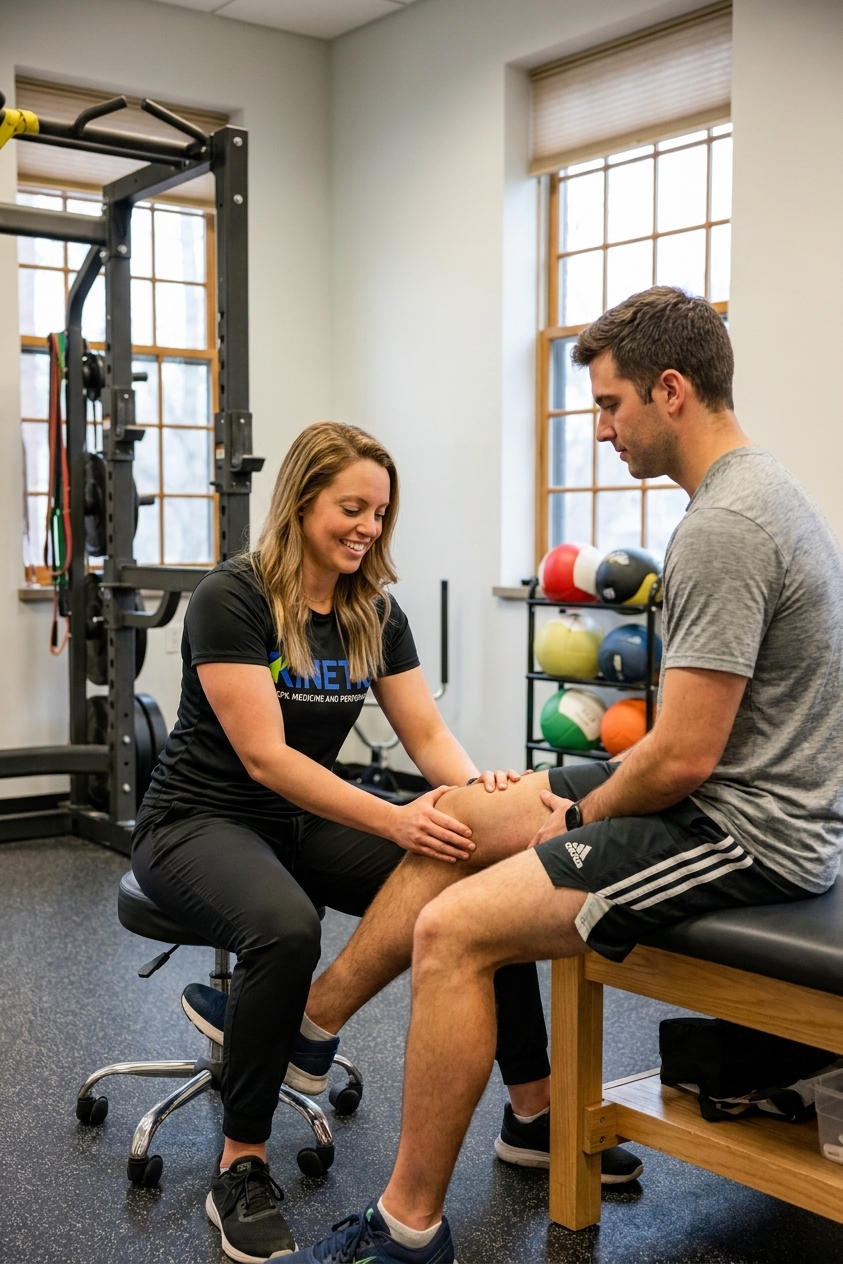
We do not guess when you are ready to return to sport. Using objective tools such as force plate testing, isokinetic dynamometer testing, and functional movement assessments, we establish evidence-based benchmarks. Delafield athletes return to the field only when their strength symmetry and movement patterns are optimized.
Pelvic Floor Physical Therapy Timelines
For female athletes and active women in Delafield, pelvic floor health is a vital component of overall performance. Whether you are managing incontinence during high-impact training, pelvic pain, or postpartum recovery, timelines depend on the complexity of the dysfunction.
Acute issues may see significant improvement within 6 to 12 weeks. Chronic pain or long-standing dysfunction may require 3 to 6 months of dedicated therapy. Our approach integrates breathwork and diaphragmatic training alongside core stability work, so you feel confident and capable during every lift, run, or jump.
Common Injury Recovery Estimates
While every case is different, the following general timelines apply to some of the most common injuries we treat:
- ACL Injury (Post-Surgical Rehab): Typically 9 to 12 months for a full return to competitive sport, allowing for proper graft maturation and completion of return-to-sport testing.
- Runner's Knee and Plantar Fasciitis: Significant improvement is often seen in 4 to 8 weeks with proper load management, running gait analysis, and targeted therapeutic exercise.
- Rotator Cuff Pain (Non-Surgical): Depending on severity, substantial improvement is common within 6 to 12 weeks. Consistent strength and conditioning work is essential for long-term overhead performance.
- Ankle Sprains: Mild to moderate sprains often respond well within 3 to 6 weeks, with a focus on neuromuscular re-education and progressive return-to-sport progressions.
- IT Band Syndrome and Hamstring Strains: These running-related injuries typically improve in 4 to 8 weeks when addressed with soft tissue mobilization, movement screening, and corrective exercise.
Our sports physical therapy programs are tailored to the exact demands of your activity, whether that involves Titleist Performance Institute (TPI) testing for golfers, sport-specific throwing progressions, or barbell-based strength training.
Why One-on-One Care Speeds Up Progress
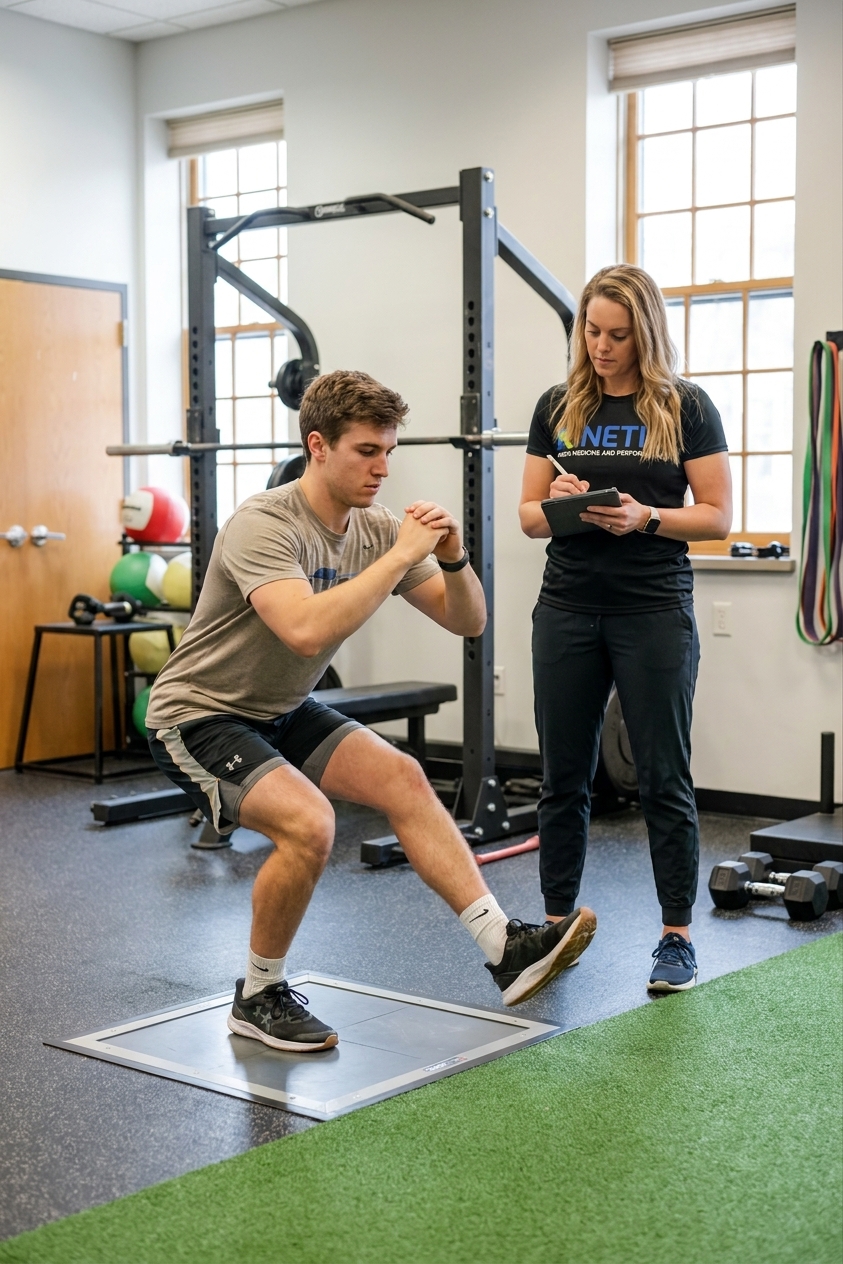
The traditional physical therapy model often involves handoffs to assistants or dividing attention across multiple patients simultaneously. At Kinetic Sports Medicine and Performance, every session is one-on-one with a Doctor of Physical Therapy for the full duration of your care.
This undivided attention allows for constant, real-time adjustments to your treatment plan. Our clinicians can identify subtle movement compensations that might otherwise go unnoticed, and every minute in the clinic is purposefully directed toward your performance goals. Treatments such as dry needling, manual therapy, blood flow restriction (BFR) training, and myofascial release are applied with precision and continuity — not rotated between providers.
Taking the First Step Toward Your Return to Sport
You do not have to settle for a "wait and see" approach or a generic rehab plan that does not account for your goals and activity level. If you are ready to get back to the activities you love — with more strength and confidence than before — Kinetic Sports Medicine and Performance is here to guide you.
Contact Kinetic Sports Medicine and Performance today to schedule a consultation. Let's build a data-driven plan to get you back to peak performance in Delafield.