If you are a competitive athlete or a goal-oriented mover, a physical therapy evaluation should be anything but routine. You are not looking for a quick range-of-motion check or a generic exercise handout. You want to understand why your knee hurts at mile four, why your shoulder feels unstable overhead, or how to rebuild core strength after a major life event. At Kinetic Sports Medicine and Performance in Delafield, WI, your evaluation is a purposeful first step toward understanding your body and building a clear path forward.
The process is built around your specific goals, your sport, and your movement demands. Clinical expertise is combined with objective testing to create a roadmap that takes you from where you are to where you want to be.
What to Expect During Your Initial Evaluation
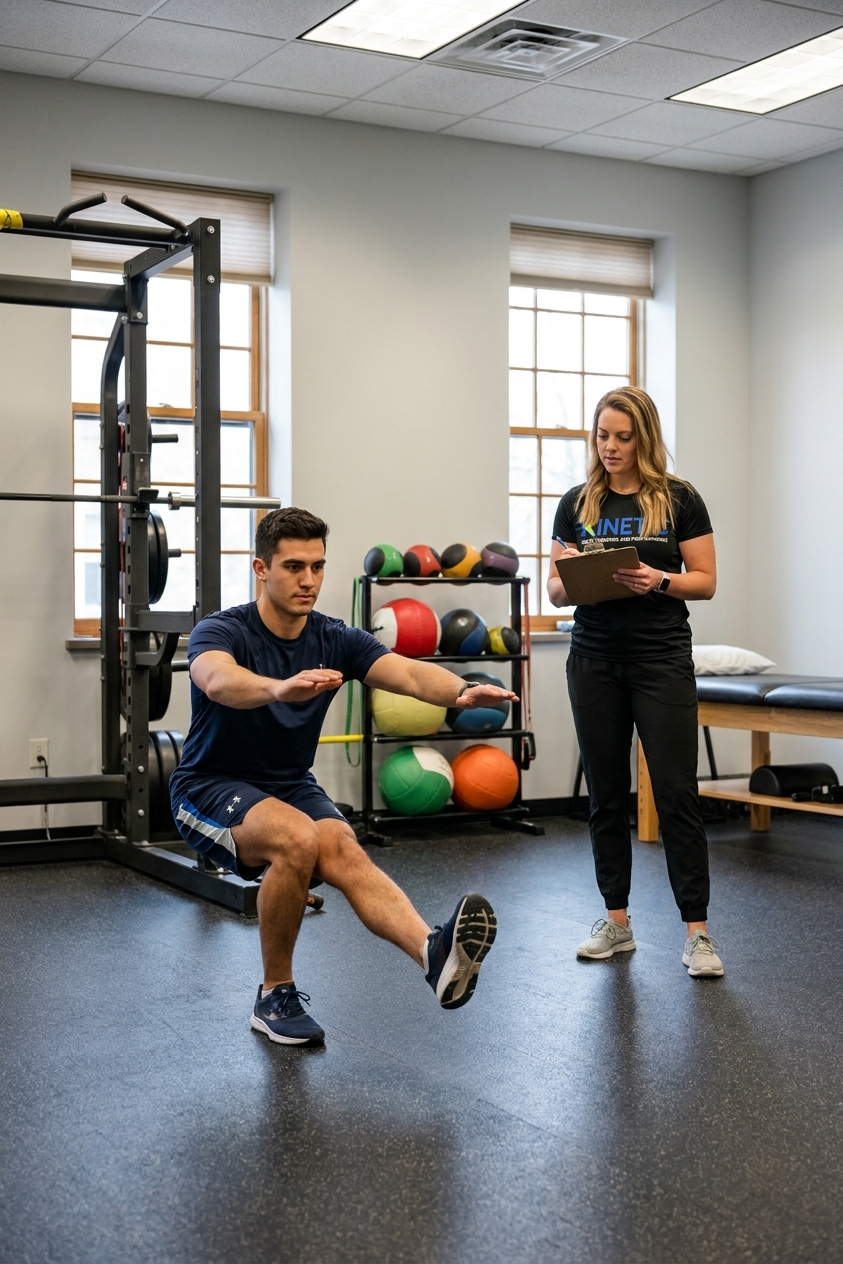
Your first appointment at Kinetic Sports Medicine and Performance is not a formality. It is a comprehensive look at how you move, where you are limited, and what is driving your pain or performance plateau. Every evaluation begins with a detailed conversation about your history, your goals, and the demands of your sport or activity.
From there, your Doctor of Physical Therapy conducts a hands-on clinical assessment that may include:
- Posture and alignment analysis
- Joint mobility and range-of-motion testing
- Strength and neuromuscular control screening
- Functional movement assessment
- Sport-specific or activity-specific movement review
This foundation gives your therapist the clinical picture needed to identify what is contributing to your symptoms and what is limiting your performance.
Objective Testing That Goes Beyond the Basics
One of the defining features of an evaluation at Kinetic Sports Medicine and Performance is access to performance-level testing that provides objective, measurable data. Rather than relying on observation alone, your therapist uses specialized tools to quantify how your body is functioning.
Force Plate Testing
Force plate testing measures how you interact with the ground during dynamic movements. This technology captures ground reaction forces and identifies subtle asymmetries between your left and right sides. These imbalances are often invisible to the naked eye but can be significant contributors to injury risk and performance limitations. The data collected helps guide a more targeted and effective treatment plan.
Running Gait Analysis and Running Form Assessment
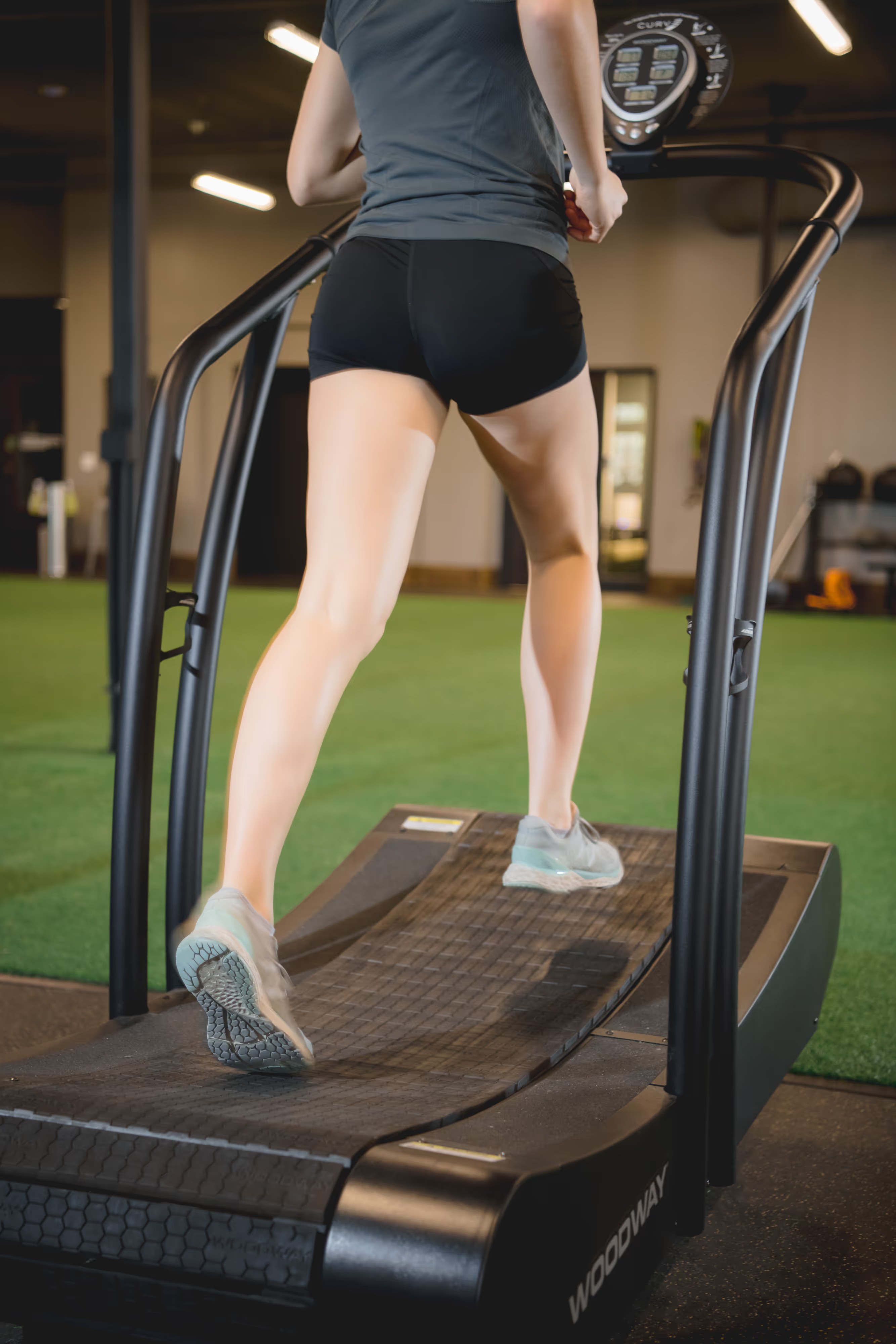
For runners dealing with conditions like runner's knee, IT band syndrome, Achilles tendinopathy, or plantar fasciitis, a running gait analysis or running form assessment can be a critical part of the evaluation. Your therapist analyzes your mechanics in motion to identify patterns that may be loading tissues inefficiently or contributing to recurring pain.
Movement Screen and Functional Movement Assessment
A movement screen or functional movement assessment evaluates how well your body moves through fundamental patterns. This helps identify mobility restrictions, stability deficits, and compensatory strategies that may be increasing your injury risk or holding back your training.
Return-to-Sport Testing
For athletes recovering from injuries such as an ACL injury, meniscus injury, or labral tear, return-to-sport testing provides objective benchmarks to determine readiness. This removes guesswork from one of the most consequential decisions in an athlete's recovery.
Titleist Performance Institute (TPI) Testing
For golfers, TPI testing evaluates the physical factors that influence your swing mechanics. This screen identifies mobility and stability limitations that may be affecting your game and guides a golf-specific treatment and performance plan.
Addressing the Pelvic Floor in Performance and Recovery
For female athletes and active individuals, pelvic floor health is a critical and often overlooked component of overall function. Issues such as pelvic pain, core instability, or symptoms that arise during high-impact activity can directly affect training and quality of life.
At Kinetic Sports Medicine and Performance, pelvic floor care is integrated into the broader performance and orthopedic framework. Your evaluation may include an assessment of core function, breathing mechanics, and diaphragmatic control, all of which are closely connected to pelvic floor performance. This is especially relevant for athletes navigating postpartum recovery, menopause support, or conditions that affect healthy aging and staying strong.
Building Your Personalized Treatment Plan
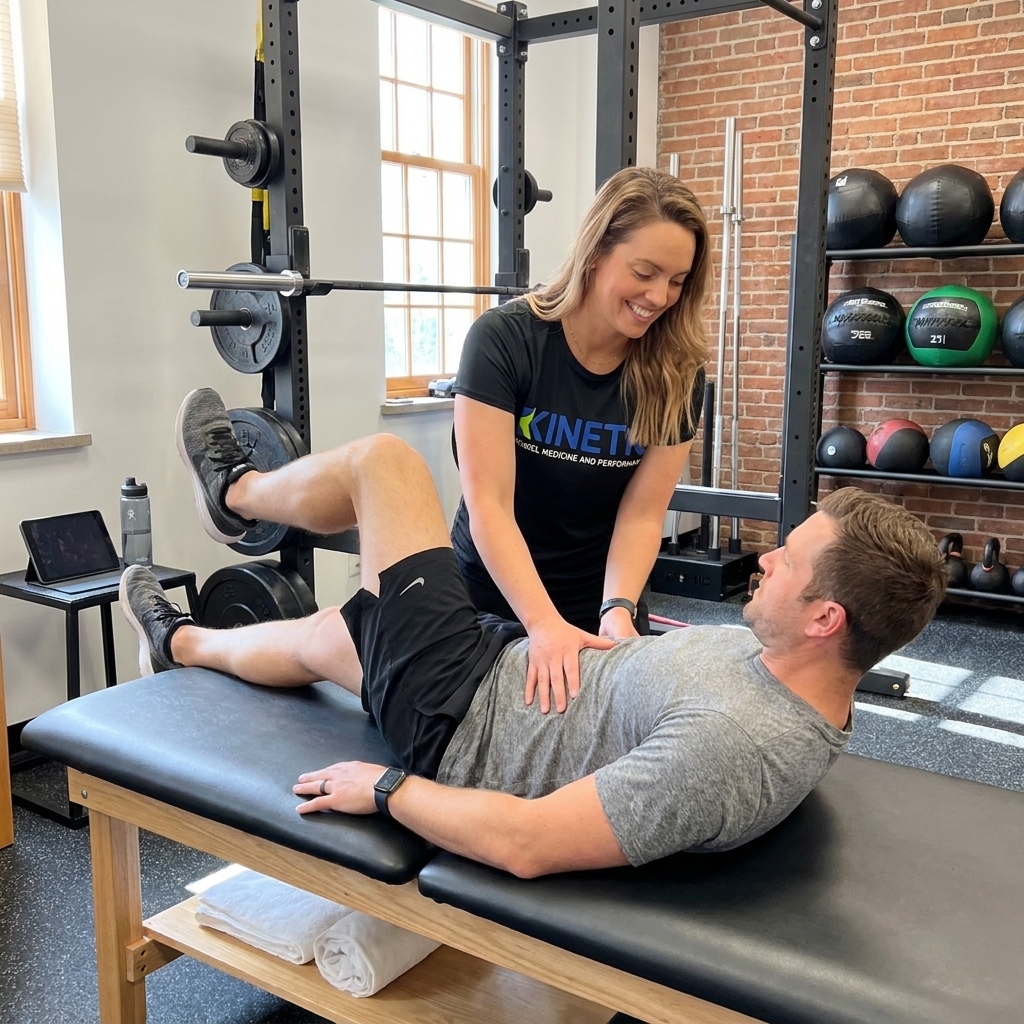
Once your evaluation is complete, your therapist will walk you through the findings and collaborate with you to establish clear, measurable goals. Whether you are focused on returning to sport, returning to running, injury prevention, strength building, or pain management, your plan is built around those priorities.
Treatment at Kinetic Sports Medicine and Performance draws from a broad range of evidence-based modalities, which may include:
- Manual therapy and joint mobilization
- Dry needling and trigger point therapy
- Myofascial release and soft tissue mobilization
- IASTM / Graston technique
- Blood flow restriction (BFR) training
- Therapeutic exercise and neuromuscular re-education
- Plyometrics and return-to-sport progressions
- Cupping, taping, and compression therapy
- Breathwork and diaphragmatic training
Every session is one-on-one with the same Doctor of Physical Therapy throughout your entire course of care. This consistency means your therapist develops a deep understanding of how your body responds and can adjust your plan with precision as you progress.
Who Benefits from a Physical Therapy Evaluation at Kinetic Sports Medicine and Performance?
The evaluation process at Kinetic Sports Medicine and Performance is designed for a wide range of individuals, including:
- Athletes managing overuse injuries, tendinopathy, or acute injuries
- Runners dealing with recurring pain or seeking to improve their form
- Individuals recovering from orthopedic surgery through post-surgery rehabilitation
- Active adults focused on prehab, mobility, or strength building
- Golfers looking to address physical limitations affecting their swing
- Female athletes navigating pelvic floor concerns or life-stage transitions
Conditions commonly addressed include low back pain, sciatica, shoulder pain, rotator cuff injuries, hip impingement, knee pain, ankle sprains, shin splints, headaches, concussion symptoms, arthritis, and more.
Take the First Step
A physical therapy evaluation in Delafield, WI at Kinetic Sports Medicine and Performance is where clarity begins. You will leave your first appointment with a thorough understanding of what is driving your pain or limiting your performance, and a concrete plan to address it.
Ready to get started? Visit Kinetic Sports Medicine and Performance to schedule your evaluation and take the first step toward moving and performing at your best.