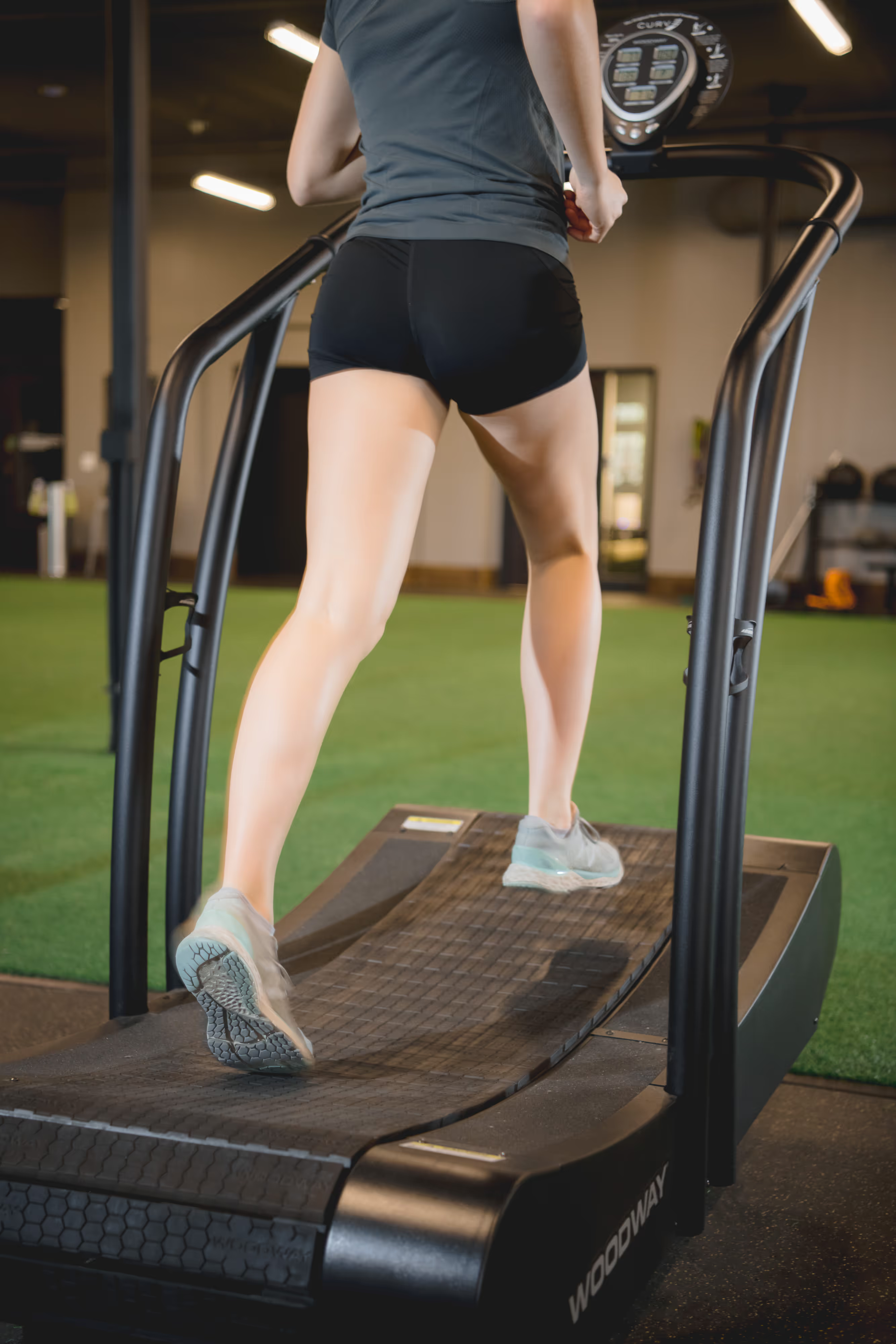
If you are an athlete in Milwaukee pushing toward a personal record, recovering from an injury, or simply trying to move and feel better, a physical therapy evaluation is where meaningful progress begins. But not all evaluations are created equal. At Kinetic Sports Medicine and Performance, the process goes far deeper than a quick check-in. It is a structured, data-driven investigation into how your body moves, where it falls short, and exactly what it needs to get you where you want to go.
Here is what you can expect when you walk through the door.
Your Athletic Story Comes First
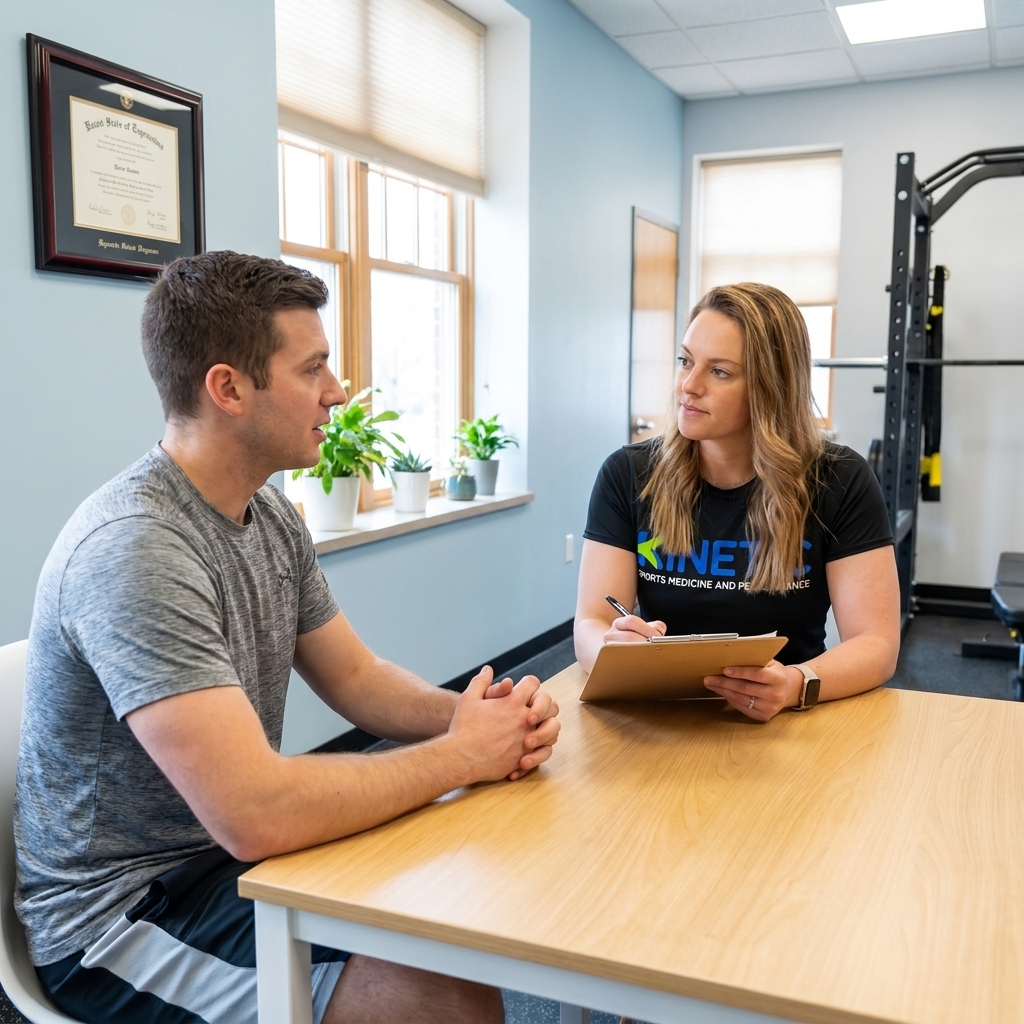
Every evaluation at Kinetic Sports Medicine and Performance begins with a detailed conversation. Before any testing or hands-on assessment takes place, your Doctor of Physical Therapy takes the time to understand your full picture. That means your training history, your current goals, the movements that feel off, and what a successful outcome actually looks like for you.
This is not a rushed intake form. It is a focused discussion designed to connect your lived experience with clinical insight. Whether you are dealing with low back pain, a nagging hamstring strain, or persistent knee pain that has been limiting your training, the context behind your symptoms matters just as much as the symptoms themselves.
You work one-on-one with the same provider throughout your session, ensuring nothing gets lost in translation.
Objective Testing and Movement Assessment
Once your history is established, the evaluation moves into objective testing. At Kinetic Sports Medicine and Performance, clinical observation is supported by advanced tools that provide measurable, reproducible data. This is where guesswork is replaced with precision.
Depending on your goals and presentation, your evaluation may include:
- Force Plate Testing to measure how you produce and absorb force, revealing asymmetries in jumping and landing mechanics
- Functional Movement Assessment to identify mobility restrictions and stability deficits that may be contributing to pain or injury risk
- Running Gait Analysis or Running Form Assessment for athletes dealing with conditions like runner's knee, IT band syndrome, Achilles tendinopathy, or plantar fasciitis
- Return-to-Sport Testing for those recovering from injuries such as an ACL injury, labral tear, or meniscus injury
- Titleist Performance Institute (TPI) Testing for golfers looking to address elbow pain, low back pain, or sport-specific movement inefficiencies
This objective baseline does more than inform your starting point. It gives your provider a benchmark to measure your progress against throughout your care.
Hands-On Clinical Examination
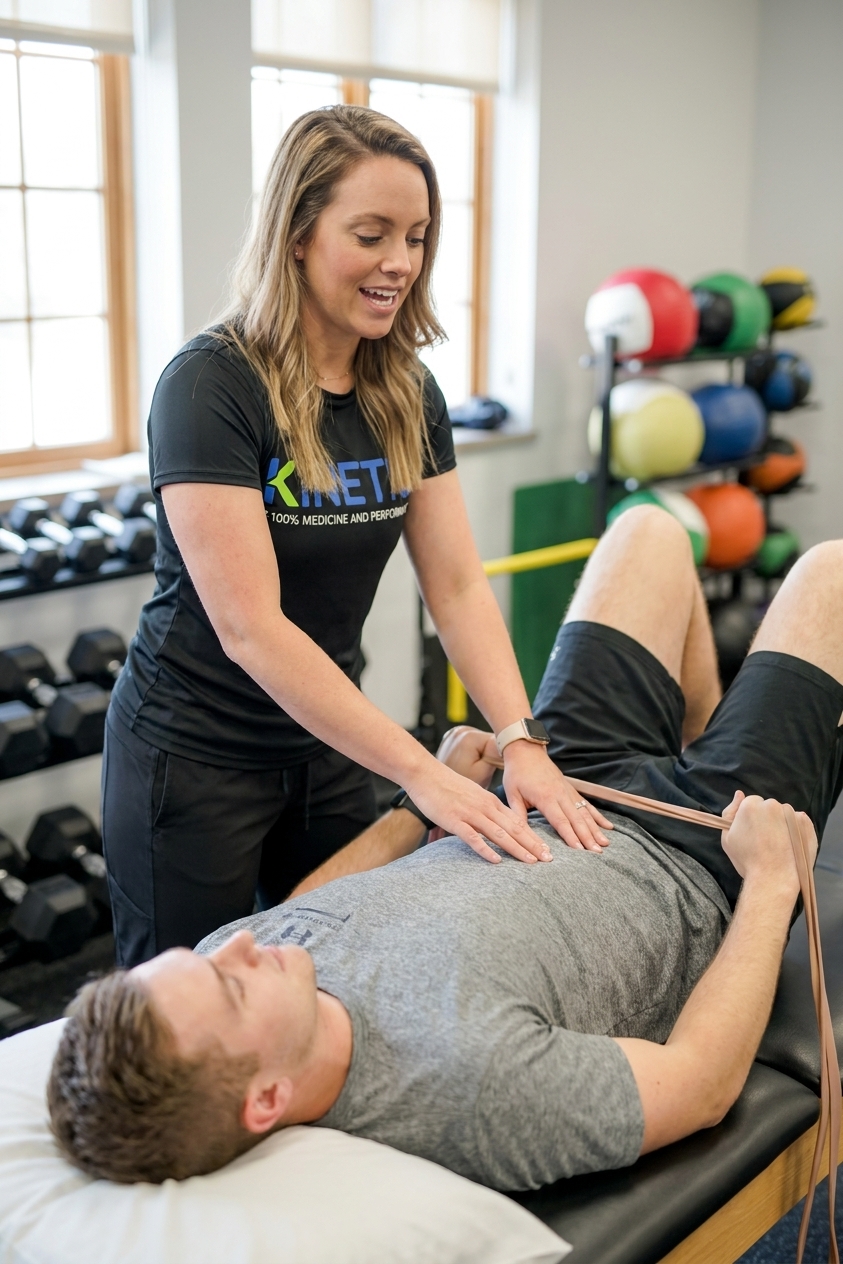
Alongside performance testing, your provider conducts a thorough physical examination. This includes assessing joint range of motion, tissue quality, strength, and neuromuscular control across the relevant areas of your body.
For someone presenting with shoulder pain or rotator cuff pain, that means a detailed look at shoulder mechanics, scapular stability, and upper extremity loading patterns. For someone managing hip impingement or groin pain, the examination extends to the pelvis, lumbar spine, and lower extremity movement chain.
The goal is not just to identify where it hurts, but to understand why. Pain is often a downstream signal of a problem occurring somewhere else entirely.
Pelvic Floor Considerations for Athletes
One area that is frequently overlooked in athletic populations is the pelvic floor. This group of muscles forms the base of the core and plays a direct role in pressure management, spinal stability, and power transfer during high-demand activities.
At Kinetic Sports Medicine and Performance, pelvic floor physical therapy is integrated into the performance model. Athletes dealing with persistent hip pain, low back pain, or symptoms such as leaking during high-impact movement may benefit from a pelvic floor assessment as part of their evaluation. This is also relevant for those navigating menopause support or healthy aging goals alongside their athletic pursuits.
The assessment evaluates how the pelvic floor coordinates with the diaphragm and deep abdominal muscles, ensuring the entire core system is functioning as a unit rather than in isolation.
Building Your Personalized Treatment Plan
Once the evaluation is complete, your provider synthesizes everything gathered into a clear, individualized plan. This is not a generic handout. It is a targeted strategy built around your specific data, your sport, and your goals.
Depending on what the evaluation reveals, your plan at Kinetic Sports Medicine and Performance may incorporate:
- Manual therapy, soft tissue mobilization, or myofascial release to address tissue restrictions
- Dry needling, cupping, or IASTM/Graston for targeted pain and tissue management
- Therapeutic exercise and neuromuscular re-education to rebuild strength and movement quality
- Blood Flow Restriction (BFR) training for strength building with reduced joint load
- Plyometrics and return-to-sport progressions for athletes working toward full athletic return
- Breathwork and diaphragmatic training to support core function and pressure management
Goals are set collaboratively and made measurable from the start, whether that means returning to running, improving mobility and flexibility, building strength, or completing a full post-surgery rehabilitation program.
What Makes a Performance-Focused Evaluation Different
A standard evaluation asks whether you are in pain. A performance physical therapy evaluation asks whether your body is capable of meeting the demands you are placing on it, and what it will take to raise that ceiling.
At Kinetic Sports Medicine and Performance in Milwaukee, the evaluation process is built around that higher standard. Advanced testing, one-on-one time with a specialist, and a plan grounded in objective data mean you leave your first session with clarity, not just a diagnosis.
If you are ready to understand what your body is actually capable of and build a clear path forward, schedule your evaluation at Kinetic Sports Medicine and Performance today.